

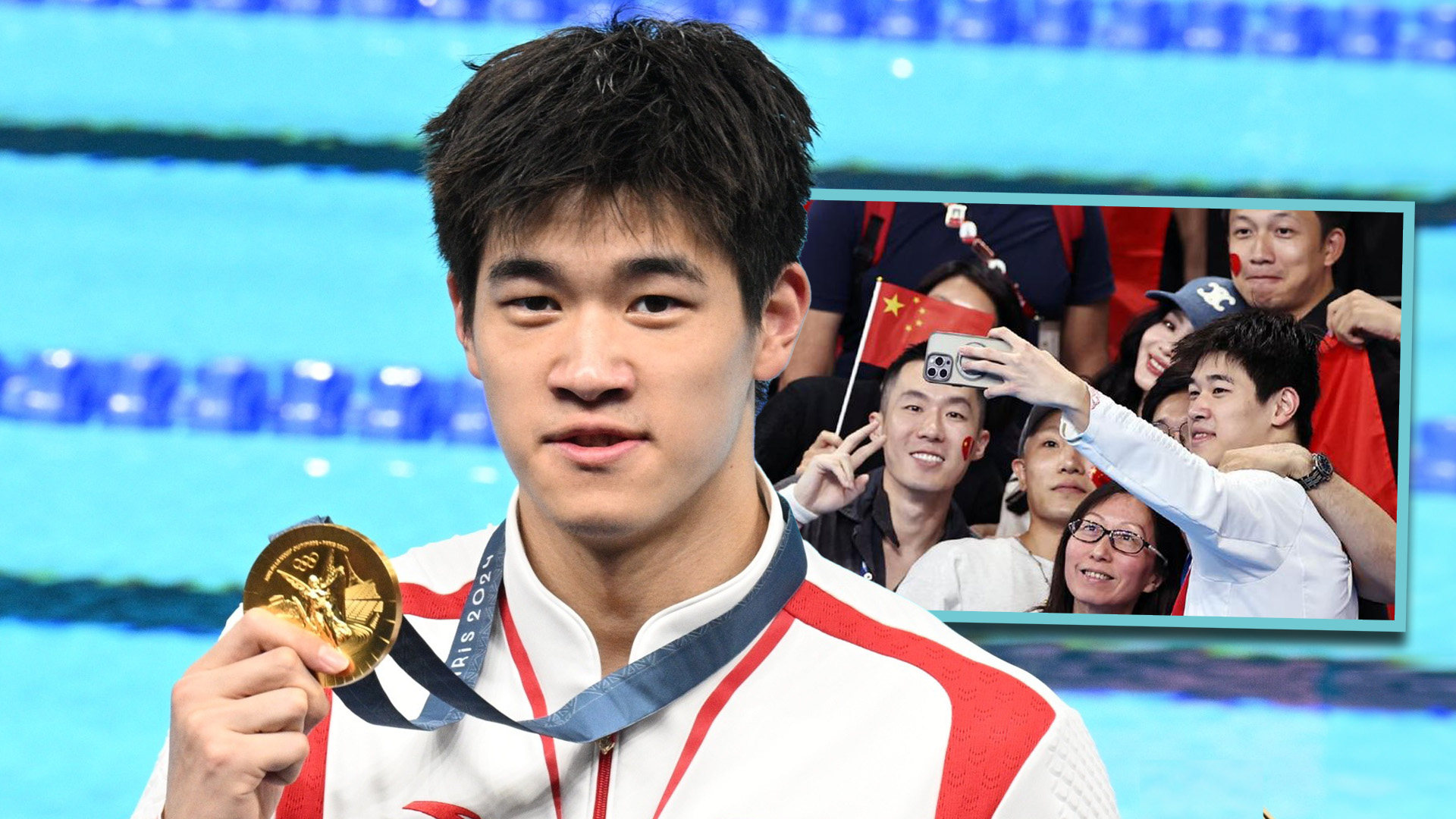
Swarms dropped on the home of 17-year-old Chinese jumper Quan Hongchan after she won two golds at the Paris Olympics while tumbler Zhang Boheng concealed in a Beijing air terminal latrine to get away from enthusiastic crowds of fans.
They are only two late instances of what state media are calling “poisonous being a fan” and Chinese specialists have promised to take action against it.
A portion of the hero worship towards China’s games stars has been more evil – – fans fixating on competitors’ very own lives, cyberbullying rivals or pummeling probably warped judges.
Specialists say it reflects the sort of conduct once saved for amusement big names, before China’s decision Socialist Coalition moved to get control over the obsessive publicity encompassing them.
Quan has been the focal point of serious interest since coming out on top for two Olympic jumping championships at the Paris Games, adding to the gold she brought back home from the pandemic-deferred Tokyo Games in 2021.
Such is the commotion encompassing her, with individuals mobbing her old neighborhood in provincial Guangdong, that she tried not to return home.
This week, as China’s Olympic group made a visit to Macau, Quan was shot in tears subsequent to being overpowered by fans at her inn.
- Online maltreatment –
Jian Xu, a specialist on Chinese big name learns at Deakin College in Australia, said that China’s games stars have progressively showed up on TV programs and in livestreams, transforming them into VIPs.
Jian called it the commercialisation and “entertainmentisation” of China’s competitors.
Yet, there is a flip-side. While certain competitors have been feted as public legends, others have endured on account of savages on the web.
Gymnastic specialist Su Weide, 24, got online maltreatment after he fell two times during his level bar routine at the Paris Olympics.
“He hauled the entire group down all alone,” read one remark on the Twitter-like Weibo, while others blamed him for acquiring his put in the group through “associations” as opposed to ability.
In the all-Chinese ladies’ table tennis last between Chen Meng and Sun Yingsha, Sun got vocal help in the field and on the web, while Chen was booed and mishandled via virtual entertainment.
“The entire nation was expecting Sun Yingsha to win the ladies’ singles gold, where’s your feeling of equity?” one Weibo remark focused on the victor Chen read.
Days after the fact, China’s Service of Public Security reported the capture of one oppressive internet based fan.
From that point forward something like five individuals have been confined or rebuffed for focusing on China’s competitors or mentors, part of the transition to manage oppressive fans and fan gatherings.
Container Zhanle, the 20-year-old swimmer who broke the 100m free-form world record en route to gold in Paris, disbanded his authority fan circle on Weibo only weeks after his victory.
Online clubs for aficionados of famous people are infamous for their wild unwaveringness to their godlike objects, advancing and shielding their stars, attempting to propel their vocations – – and spreading their rivals.
The gatherings were typically for pop artists and celebrities, however as of late they have been conformed to China’s inexorably attractive and marketed sports stars.
- ‘Right point of view’ –
As per the master Jian, numerous youngsters directed their web-based concentration toward sports stars after specialists started reinforcing oversight of superstar fan bunches in 2021.
Specialists were stressed over the impact of the groups of followers on youths and a portion of the way of behaving that went with them.
Fans thought the games world was “a generally protected region because of the significance of sports to the country and the high status of sports stars as good examples”, he told AFP.
“They can communicate their public pride and enthusiasm through supporting their games symbols who battle for China.”
Yet, presently specialists seem to feel that as a conductor for public pride, it has gone excessively far.
Last week, China’s Overall Organization of Game (GAS) denounced “mutilated fan culture” for “harming the standing of the games business”.
Gao Zhidan, head of GAS, likewise cautioned competitors they can have their influence as good examples that have a “right point of view (and) view notoriety objectively”.
Ms Tan, a 41-year-old in Shanghai who just gave her family name, supported the swimmer Skillet disbanding his fan bunch.
Fruitful stars, whether donning or in different fields, “ought to think often more about their own advancement and not care a lot about what individuals around them or their fans think”, she said.
 NewsDocs